
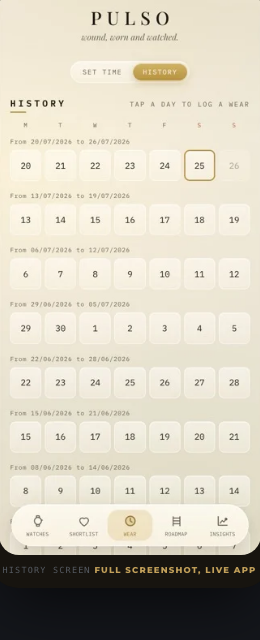
Until 30 July, Pulso on the phone could show you everything and change nothing. It read the live API, rendered the collection, and that was the whole contract. On the evening of the 30th that changed: the app writes now.
The add-watch flow went in behind the FAB, search then enrich then save, and I gated it deliberately. It spends a paid API call, so it doesn’t fire on a stray tap, it asks for sign-off first. Same evening, wear logging went live: tap a day on the calendar or tap the wear pill and it records, no trip back to the website. The WatchDetail Service tab landed alongside it with add-story and add-service forms, so a watch’s maintenance history is finally something I can add to from the sofa rather than only read.
The fix worth naming is in v1.1.2. Price search was failing on real watches, and the cause wasn’t the search, it was the suggestion model inventing a reference number that doesn’t exist, after which the lookup dutifully went hunting for a watch nobody makes. It now retries on brand and model alone when the reference draws a blank. Cheap fix, and it only surfaced because I ran messy real queries instead of the tidy ones I knew would pass.
Also this week, a convention rather than a feature: every install on my phone now bumps a build number and logs what changed, in docs/BUILDS.md and in Orbit. v1.1.2 is the third build in two days. Without that I’d already have lost track of which version on my phone carried which fix, which is exactly the sort of small bookkeeping that quietly turns into a debugging problem a fortnight later.
Get Useful Personal Tech by email. One short email a week: one piece of tech I’ve tested, and whether it’s worth buying, upgrading or skipping. Free, unsubscribe in one click.
